





Gold IRA Storage at Home
DS
Daniel Stone, CFP
IRA Diversification Specialist • 12+ Years Experience
Updated: June 2026 | Independently reviewed

Gold IRA Storage at Home: Is It IRS-Compliant?

The IRS requires all Gold IRA precious metals to be stored in an approved depository by a qualified trustee — not at home. Storing IRA gold at home can trigger a full taxable distribution plus a 10% early withdrawal penalty.

Affiliate Disclosure: We receive referral fees from listed companies. Rankings are based on BBB ratings, fees, minimums, storage options, and customer reviews — not compensation. For informational purposes only — not financial advice. See full disclosure below.
Author: Daniel Stone, CFPTitle: IRA Diversification Specialist · 12+ Years ExperienceLast updated: June 19, 2026
Sources cited: IRS Publication 590-A/590-B · World Gold Council · Federal Reserve Economic Data

Prefer to talk to a specialist?

Call Free: 1-833-659-3601Free consultation · No obligation

Best Gold IRA Companies 2026

CompanyRatingMinBBB
Augusta Precious Metals logo
Augusta Precious Metals
Best Overall Gold IRA Company
★★★★★
4.9/5
$50,000A+Visit SiteReview
Goldco logo
Goldco
Best for First-Time Investors
★★★★★
4.8/5
$25,000A+Visit SiteReview
Birch Gold Group logo
Birch Gold Group
Best Educational Resources
★★★★★
4.7/5
$10,000A+Visit SiteReview
American Hartford Gold logo
American Hartford Gold
Best Price Protection
★★★★☆
4.6/5
$10,000A+Visit SiteReview
Noble Gold Investments logo
Noble Gold Investments
Best for Royal Survival Packs
★★★★☆
4.5/5
$5,000A+Visit SiteReview

Gold IRA Company Reviews 2026

Independently reviewed based on fees, BBB ratings, minimums, storage options, and customer feedback. Last updated: June 2026.

Augusta Precious Metals
#1 Best Overall 2026★★★★★4.9/5BBB A+
Min. Investment$50,000
Annual Fees~$200/year (waived yr 1)
StorageDelaware Depository

Augusta Precious Metals has built one of the strongest reputations in the gold IRA industry since its founding in 2012. The company focuses exclusively on gold and silver IRAs — which means every product, every specialist, and every process is optimized for a single asset class. That focus translates directly into a better customer experience compared to firms that spread resources across multiple products.

Augusta's hallmark feature is its one-on-one web conference with a Harvard-trained economist — a 45-minute session that explains the macroeconomic case for precious metals, IRS regulations, and what to expect during the account setup process. Unlike most competitors who push investors toward a decision quickly, Augusta requires this education step before any purchase. The approach reduces buyer's remorse and has contributed to Augusta receiving zero complaints with the Better Business Bureau for multiple consecutive years.

The price match guarantee means Augusta will match any comparable competitor's price on the same product. Lifetime customer support means your assigned specialist is available for the life of your account — not just during onboarding. The primary drawback is the $50,000 minimum, which makes Augusta inaccessible to investors with smaller retirement accounts.

Pros

  • ✓ Zero BBB complaints on record
  • ✓ Lifetime dedicated specialist
  • ✓ Price match guarantee
  • ✓ Mandatory education step reduces risk

Cons

  • ✗ $50,000 minimum — highest in category
  • ✗ Gold and silver only (no platinum/palladium)

Best for: Investors with $50,000+ who want education-first service and the industry's strongest customer support commitment.

Call Free: 1-833-659-3601

Free consultation · No obligation

Goldco
#2 Best for First-Time Investors★★★★★4.8/5BBB A+
Min. Investment$25,000
Annual Fees~$180/year
Founded2006 (18+ years)

Goldco is one of the most recognizable names in the gold IRA industry, founded in 2006 with a track record spanning nearly two decades. The company is particularly well-positioned for first-time precious metals investors: their $25,000 minimum is lower than Augusta's, their onboarding process is streamlined, and they provide a free gold IRA investment guide that explains the process without requiring a phone call first.

Goldco's most distinctive feature is its buyback guarantee. When you eventually need to liquidate your gold IRA holdings, Goldco commits to buying back your metals at competitive market prices with no liquidation fees. This matters because selling physical gold outside a buyback program can be slow and expensive — dealers charge spreads, and finding a buyer at spot price is not guaranteed. The buyback guarantee effectively removes this exit risk.

The company works with Equity Trust and STRATA Trust as custodians and partners with multiple IRS-approved depositories including Delaware Depository. Goldco offers gold, silver, platinum, and palladium — although platinum and palladium have lower availability than gold and silver. Customer reviews on TrustPilot and Google are consistently high, with thousands of verified 5-star reviews.

Pros

  • ✓ Industry-best buyback guarantee
  • ✓ Lower minimum than Augusta ($25,000)
  • ✓ Free investment guide — no call required
  • ✓ 18+ years in business, thousands of reviews

Cons

  • ✗ Platinum/palladium availability limited
  • ✗ No mandatory education step (buyer beware)

Best for: First-time gold IRA investors with $25,000–$50,000 who want a buyback guarantee and a streamlined onboarding process.

Call Free: 1-833-659-3601

Free consultation · No obligation

Birch Gold Group
#3 Best Educational Resources★★★★★4.7/5BBB A+
Min. Investment$10,000
Annual Fees~$180/year
Founded2003 (20+ years)

Birch Gold Group is the oldest company on this list, founded in 2003 and operating continuously for over 20 years. That longevity matters in an industry where fly-by-night operators have historically caused investor harm. Birch's two decades of operation means they have navigated the 2008 financial crisis, the post-2011 gold price collapse, and the 2020 pandemic market — and they are still here.

The $10,000 minimum is the lowest among standard (non-survival-pack) gold IRA providers on this list, making Birch accessible to investors who are earlier in their retirement savings journey. Their educational resource library is unmatched — they produce in-depth guides, video content, and offer personalized one-on-one consultations with precious metals specialists who are not commissioned salespeople.

Birch Gold offers all four IRS-approved precious metals: gold, silver, platinum, and palladium. They work with STRATA Trust and Equity Trust as custodians and partner with Brink's and Delaware Depository for storage. One meaningful drawback: Birch does not offer a formal buyback guarantee, unlike Goldco. Exiting a Birch Gold IRA requires working with a dealer on the open market.

Pros

  • ✓ Lowest standard minimum ($10,000)
  • ✓ 20+ year operating history
  • ✓ Best educational content in the industry
  • ✓ All 4 precious metals available

Cons

  • ✗ No formal buyback guarantee
  • ✗ Annual fees slightly above category average

Best for: Investors with $10,000–$25,000 who want the lowest minimum, strong education, and a long-tenured company.

Call Free: 1-833-659-3601

Free consultation · No obligation

American Hartford Gold
#4 Best Price Protection★★★★☆4.6/5BBB A+
Min. Investment$10,000
Year 1 Fees$0 (waived)
Founded2015

American Hartford Gold launched in 2015 in Los Angeles and has grown rapidly, earning an A+ BBB rating in under a decade. While they lack the longevity of Birch Gold or Goldco, they have distinguished themselves through aggressive fee incentives and a formal price protection program — two features no other company on this list offers simultaneously.

The first-year fee waiver means new accounts pay zero custodian fees and zero storage fees in year one. On a $10,000 account this saves approximately $180–$250. The price protection program is more unusual: if the value of your metals declines within a defined period after purchase, American Hartford Gold will adjust your account accordingly. This is effectively downside protection at purchase — a meaningful risk-reduction feature for nervous first-time buyers.

American Hartford Gold also commits to zero liquidation fees, meaning when you sell your metals back, there are no transaction costs beyond the market bid-ask spread. They work with Equity Trust as their primary custodian and partner with Brink's and Delaware Depository for storage. Available metals: gold and silver only.

Pros

  • ✓ First year fees fully waived
  • ✓ Price protection program at purchase
  • ✓ No liquidation fees ever
  • ✓ $10,000 minimum

Cons

  • ✗ Founded 2015 — less track record
  • ✗ Gold and silver only

Best for: Cost-conscious investors with $10,000–$25,000 who want zero first-year fees and price protection against short-term metal price declines.

Call Free: 1-833-659-3601

Free consultation · No obligation

Noble Gold Investments
#5 Best for Survival Packs★★★★☆4.5/5BBB A+
Min. Investment$5,000
Annual Fees~$225/year
StorageTexas (IDS) or Delaware

Noble Gold Investments, founded in 2017, differentiates itself through geographic and product diversification that none of its competitors match. Their partnership with International Depository Services (IDS) in Texas gives investors a storage option outside the traditional East Coast vault network — meaningful for investors who want their physical assets housed in a different regulatory and geographic environment than Delaware or New York.

Noble Gold's Royal Survival Packs are a unique product: pre-assembled packages of physical precious metals coins specifically designed for emergency preparedness, delivered directly to your home outside of the IRA structure. These range from $10,000 to $500,000 and include a mix of gold and silver coins selected for liquidity and recognizability. While not an IRA product, they complement a gold IRA strategy by providing immediate-access precious metals alongside your retirement holdings.

With the lowest minimum on this list at $5,000, Noble Gold is accessible to investors earlier in their savings journey — though at that account size, the ~$225/year in annual fees represents a 4.5% annual drag, which is significant. Noble Gold is best deployed at $15,000+ to make the fee structure reasonable. Available metals: gold, silver, platinum, and palladium, plus rare coins.

Pros

  • ✓ Lowest minimum ($5,000)
  • ✓ Texas storage via IDS
  • ✓ Unique Royal Survival Packs
  • ✓ All 4 metals + rare coins

Cons

  • ✗ Newest company (est. 2017)
  • ✗ High fee-to-minimum ratio at small balances

Best for: Investors who want Texas storage, rare coins, or emergency precious metals outside their IRA alongside a standard gold IRA account.

Call Free: 1-833-659-3601

Free consultation · No obligation

Our Review Methodology

Rankings on this page are based on independent research across five weighted criteria:

  1. BBB rating, complaint history, and third-party review volume (TrustPilot, Google) — 30%
  2. Fee transparency: are all fees disclosed upfront without requiring a phone call? — 25%
  3. Minimum investment accessibility and fee-to-minimum ratio — 20%
  4. Storage options: number of IRS-approved depositories, segregated availability — 15%
  5. Unique customer-friendly features: buyback guarantees, price protection, education resources — 10%

We receive affiliate compensation from companies listed. Compensation does not influence rankings — companies are ranked by the criteria above. See our full disclosure below.

Full Affiliate & Editorial Disclosure

This website is independently owned and operated. We maintain editorial independence from all companies listed or reviewed. Our rankings and assessments are based on the methodology described above and are not influenced by commercial relationships.

We receive referral fees when visitors click links to company websites and complete an inquiry form or open an account. This compensation helps fund the research and editorial work required to maintain this guide. The existence of a referral relationship does not affect our ratings, recommendations, or editorial content.

This content is for informational and educational purposes only and does not constitute financial, investment, tax, or legal advice. Gold IRA investments involve risk, including the possible loss of principal. Past performance is not indicative of future results. Consult a qualified financial advisor before making any investment decision. Last reviewed: June 2026.

Gold IRA Storage at Home: What Every Investor Needs to Know Before You Hold Physical Gold at Home

Understanding a Gold IRA and Why Storage Matters

A gold IRA is a self directed IRA that allows investors to buy gold and other precious metals as IRA assets alongside other assets they might hold in a retirement account. The goal is simple: diversify a retirement portfolio beyond stocks, bonds, and cash with metals such as physical gold, silver, platinum, and palladium. A gold IRA can be a traditional IRA or a Roth, and when structured correctly under IRS rules, it can keep tax deferred status or retain tax free growth in a Roth. But storage is not optional or casual in the eyes of the internal revenue service. The IRS has specific regulations that govern how gold must be stored, who the trustee is, what counts as irs approved precious metals, and how distribution and withdrawal events are taxed. If you are considering gold IRA storage at home or a home storage gold ira marketed by a company promising home delivery, this guide explains what the law allows, what the IRS guidelines say, and how to avoid penalties and taxes that could affect your wealth.

IRS Regulations: How a Gold IRA Works

Under irs regulations, IRA assets must be held by a qualified trustee or custodian, not by the account owner personally. In practical terms, that means gold must be stored by an IRS approved bank, credit union, trust company, or a specialized depository that meets strict security, insurance, auditing, and reporting rules. If you open a self directed IRA to invest in bullion and coins, the custodian facilitates the purchase, arranges storage, and tracks holdings for your account. The IRS requires irs approved precious metals that meet minimum fineness standards for gold, silver, platinum, and palladium. Popular bullion coins and bars that are IRS approved are eligible when purchased through your IRA and stored in a depository via an approved trustee. While you can buy gold personally and keep gold at home in a home safe, that is different from holding metals inside an individual retirement account. When the metals belong to your IRA, physical possession by you is not allowed. If you take physical possession of IRA metals outside of a qualified distribution, the IRS treats it as a distribution, subject to income taxes and potentially early withdrawal penalties if you are under age 59½. The law is clear: to keep your tax deferred status or tax free Roth treatment intact, IRA metals must be stored with a custodian and not at home.

Home Storage: Why “Gold IRA Storage at Home” Is Risky

The phrase home storage gold ira is widely used in marketing, but it often conflicts with irs rules. Some promoters suggest using an LLC (sometimes called a “checkbook LLC”) to hold physical gold at home while claiming it remains within the IRA. However, the IRS and recent tax court developments indicate that home storage by the IRA owner is not compliant. The fundamental issue is physical possession and control. If you keep gold at home that is titled to an IRA-owned LLC, you exercise personal control over IRA assets, which can violate the rules requiring an independent trustee. The internal revenue service may deem this an immediate distribution. That means you pay taxes at ordinary income rates on the value of the metals, plus a 10% early withdrawal penalty if you are below the qualifying age. Even if a company markets a home storage solution, the account remains subject to IRS guidelines, and noncompliance can lead to penalties, back taxes, and loss of IRA status. In short, storing IRA gold at home is not the same as storing personal gold at home. For IRA metals, home storage triggers significant risk.

What the IRS Approves: Trustees, Depositories, and Rules

Approved Trustees and Custodians

An approved trustee or custodian for a gold IRA is typically a bank, federally insured credit union, trust company, or an IRS approved nonbank trustee. These firms handle account administration, reporting to the IRS, and the logistics of buying bullion and arranging storage. They hold title to the metals on behalf of your IRA and keep the account in compliance with the law.

IRS Approved Depositories

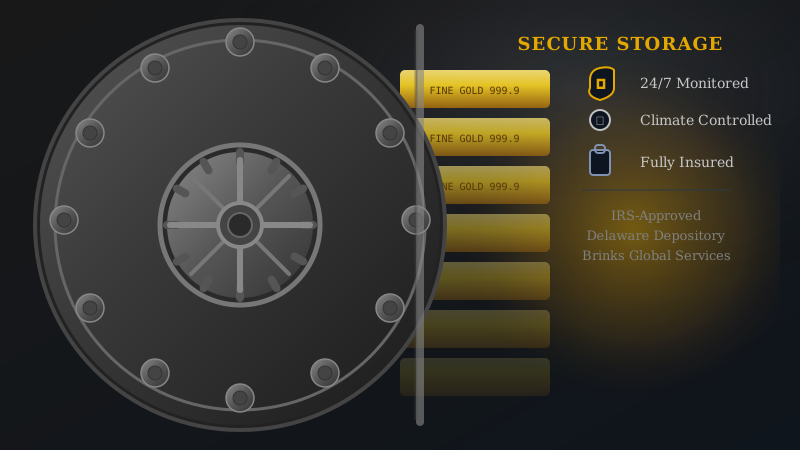
A depository is a high-security storage facility that provides segregation options, insurance, and audit trails. Many depository providers are purpose-built for precious metals with advanced security, environmental controls, and strict chain-of-custody procedures. Using a depository ensures your gold investment remains compliant, secure, and verifiable.

IRS Approved Precious Metals

Not all metals qualify as IRA assets. The IRS approved list includes certain bullion coins and bars that meet fineness standards for gold, silver, platinum, and palladium. Collectibles are generally not approved. Your self directed IRA custodian will provide a list of eligible bullion products to ensure you buy gold and other precious metals that meet the rules.

Can You Keep Gold at Home? Separating IRA Rules from Personal Ownership

You can personally own gold and keep gold at home in a home safe or a bank safe deposit box outside of an IRA. But that is separate from IRA holdings. When metals are held by your IRA, the IRS requires a trustee and approved storage. If you want to hold physical gold personally, you can buy gold with personal funds, not IRA funds. Personal investing has no tax deferred status, and gains may be subject to capital gains taxes. In contrast, a gold IRA is designed for retirement savings; it keeps the tax advantages of a retirement account as long as storage and distribution rules are followed. Confusing these two can trigger taxes, penalties, and complications with your account.

Self Directed IRA Structure: How to Invest in Metals the Right Way

Opening the Account

To invest in precious metals through a self directed IRA, you open an account with a custodian that supports metals. You can fund it via rollover from a traditional IRA, 401(k), or other qualified plan, or via annual contributions subject to age and contribution limits. The custodian helps you select an IRS approved depository and ensures the metals you buy are approved.

Buying and Storing Metals

Once your funds settle, you instruct the custodian to buy bullion that meets IRS guidelines. The company routes the order through approved dealers, arranges insured shipping to the depository, and records the assets as IRA holdings. Your metals are stored in an account under the custodian’s oversight. You do not take delivery of physical gold, and you do not keep gold at home for IRA purposes.

Tracking and Reporting

Your custodian provides statements, handles IRS reporting for contributions, rollovers, distribution events, and fair market value of assets. All storage fees, dealer spreads, and account charges should be transparent so you can manage investment costs as part of your broader finance plan.

Home Delivery, Distribution, and Withdrawal: What’s Allowed

Home delivery of IRA metals generally occurs only when you take a distribution or an in-kind withdrawal. If you choose an in-kind distribution, the depository ships the metals to you; at that point, you pay taxes at ordinary income rates for a traditional IRA distribution. If you are under age 59½, the withdrawal may be subject to the early withdrawal penalty. In a Roth, qualified distributions may be tax free. Alternatively, you may sell metals within the IRA and take a cash distribution. Properly managing distribution and withdrawal decisions can help minimize taxes and penalties while aligning with retirement goals.

Costs and Security: Comparing Storage Options

Segregated vs. Non-Segregated Storage

Depository storage typically offers segregated storage (your exact coins and bars are kept separately) or non-segregated/commingled storage (your holdings are pooled with like metals). Segregated storage costs more, but some investors value the certainty of specific bar and coin custody. Non-segregated storage is more cost-effective.

Storage Fees and Account Fees

Expect an annual storage fee based on asset value or a flat fee, plus the self directed IRA custodian’s annual account fee. Some custodians also charge transaction fees when you buy or sell metals. Understanding the fee schedule helps you evaluate benefits relative to other assets, such as stocks, bonds, or funds.

Security Considerations

A professional depository offers layered security, insurance, and third-party audits. While a home safe can protect personal bullion, it is not compliant for IRA metals. Moreover, the security profile of a depository is typically superior to home storage for significant wealth, which can affect net worth preservation. For IRA metals, using an approved depository is both a compliance and a risk management decision.

The Tax Landscape: How Taxes Apply to a Gold IRA

The core tax advantage of a gold IRA is the same as any IRA: deferral for a traditional IRA, or tax free qualified withdrawals for a Roth. Contributions, rollovers, and distributions are governed by the same rules that apply to other retirement accounts. If you take an in-kind distribution of physical gold from your IRA, the fair market value is treated as a distribution. With a traditional IRA, you pay taxes as ordinary income, and if you are below the required age threshold, you may face a 10% early withdrawal penalty. For a Roth, qualified withdrawals can be tax free. If you attempt home storage where you personally control physical possession of IRA metals outside a qualified distribution, the IRS may deem it a distribution in the year of the violation, causing income taxes, penalties, and loss of IRA status for the assets in question. Following rules preserves the tax benefits while reducing the risk of unexpected taxes.

Common Myths About Gold IRA Storage at Home

Myth 1: An LLC Lets You Store Gold at Home Within Your IRA

Reality: While an IRA-owned LLC can sometimes streamline real estate or private investment transactions, it does not allow the IRA owner to keep physical gold at home. The IRS requires a qualified trustee to hold IRA metals. Personal control equals physical possession, which can be treated as a distribution.

Myth 2: A Bank Safe Deposit Box Counts as Depository Storage

Reality: A bank safe deposit box you rent personally is not the same as an IRS approved depository under a custodian’s control. Self storage at a bank or home safe does not satisfy the trustee requirement for IRA holdings.

Myth 3: Marketing Claims Overrule IRS Regulations

Reality: No marketing brochure or company promise can change IRS regulations. If a home storage solution contradicts the law, you risk taxes and penalties. Always verify claims with your custodian and review current irs guidelines.

Building a Diversified Retirement Portfolio with Metals

Precious metals can be a valuable part of a diversified investment strategy inside a self directed IRA. Gold often behaves differently than stocks and bonds during market stress, offering potential benefits for long-term investors who want to reduce correlation and protect purchasing power. Silver can provide more volatility, while platinum and palladium are tied to industrial demand. When combined thoughtfully with other assets, metals can help balance risk across your account. The key is to follow rules, use an IRS approved custodian and depository, and evaluate allocation relative to your age, risk tolerance, and overall savings targets.

Buying and Selling Metals in an IRA

When you buy gold within your IRA, the custodian facilitates the transaction with approved dealers. You can add other precious metals that meet IRS standards. When rebalancing, you can sell metals and move funds into cash, stocks, funds, or bonds within the IRA without creating a taxable event at the time of the trade. Taxation occurs when you take a distribution. This flexibility allows investors to adapt to changing markets while keeping tax advantages intact. Work with your custodian to compare spreads, confirm approved bullion, and verify that all trades remain compliant with irs regulations.

Penalties and Pitfalls to Avoid

Improper storage is among the most serious pitfalls. If you treat IRA metals as personal property—keeping them in a home safe or arranging home delivery without a distribution—you risk disqualification. The assets could be treated as distributed, subject to income taxes and early withdrawal penalties if applicable. Another common issue is misunderstanding required minimum distributions for traditional IRAs. If your account includes metals, you may need to sell enough to cover the distribution or take an in-kind withdrawal and pay taxes accordingly. Stay mindful of fees, too. High fees can erode returns. Finally, keep good records—work with a reputable trustee and depository so holdings are stored properly and reporting to the IRS is accurate.

How to Evaluate a Gold IRA Company

Look for a company with experience in self directed accounts, clear fee disclosures, and established relationships with IRS approved depositories. The custodian should explain rules in plain language, provide a list of approved bullion products, and outline how storage, insurance, and auditing work. Verify that the trustee is properly regulated and that the depository is a recognized facility with strong security. Ask about distribution options, including selling metals for cash or taking in-kind distribution. A trustworthy company emphasizes compliance and security over aggressive home storage promises. Reputable guidance helps investors avoid costly mistakes in finance and taxes.

When Could Home Storage Make Sense? Personal Metals Outside an IRA

Home storage can make sense for personal bullion bought with non-IRA money. If you value immediate physical possession and are comfortable managing security, you can hold gold at home or in a bank safe deposit box. You will not enjoy tax deferred status on gains, and you will pay taxes under standard capital gain rules when you sell, but you gain direct control. Many investors balance IRA metals stored in a depository with separate personal bullion holdings to meet both retirement and liquidity goals. Just be sure to keep clean records to distinguish IRA assets from personal assets.

Setting Allocation: How Much Gold Belongs in an IRA?

There is no one-size-fits-all number. Some investors consider a 5%–10% allocation to precious metals, while others choose higher or lower depending on risk tolerance, time horizon, and market outlook. Consider your age, expected withdrawals, and the role metals play relative to stocks, bonds, and cash. Evaluate how metals affect your overall volatility and whether they align with your retirement income plan. Revisit allocations periodically and rebalance as needed.

Rollover, Transfers, and Moving Forward

If you want to add metals to an existing retirement account, you can complete a rollover or trustee-to-trustee transfer to a self directed IRA that supports metals. Work with your current provider and the new custodian to avoid accidental distributions. Once the account is funded, you can buy approved bullion and select depository storage that fits your needs. Moving forward, keep documentation, review storage confirmations, and ensure your holdings remain stored with an IRS approved trustee or depository—not at home. This protects your tax advantages and keeps your IRA compliant.

Key Takeaways on Home Storage vs. Approved Storage

- Home storage gold ira arrangements can violate IRS rules because they create physical possession by the owner, not by an approved trustee.- To maintain tax advantages, IRA metals must be stored in an IRS approved depository via a qualified trustee; in short, gold must be stored by the custodian, not the account owner.- Personal gold at home is allowed for non-IRA holdings, but it is separate from IRA assets and subject to capital gains tax when you sell.- Any home delivery of IRA metals without a proper distribution can be treated as a taxable distribution, subject to ordinary income taxation and possibly early withdrawal penalties.- Always confirm with your custodian which bullion is eligible and where it will be stored to ensure compliance and security.

Augusta Precious Metals

🏆 Special Offer from Augusta Precious Metals

Augusta Precious Metals is America's #1 rated Gold IRA company. Get your FREE Gold IRA Kit today — no obligation, ships within 24-48 hours.

Request Your Free Gold IRA Kit →

✓ No obligation ✓ 100% Free ✓ Ships in 24-48h

Frequently Asked Questions

Can I store my gold IRA at home?

No. For IRA assets, the IRS requires a qualified trustee or custodian to hold physical gold and other precious metals in an approved depository. If you store IRA gold at home or take physical possession without a proper distribution, the internal revenue service can treat it as a distribution, and you may pay taxes at ordinary income rates plus an early withdrawal penalty if you are under age 59½. Marketing terms like home storage gold ira can be misleading. To keep tax deferred status in a traditional IRA or tax free qualified treatment in a Roth, use IRS approved storage under a custodian’s control.

How much gold can you keep at home legally?

For personal, non-IRA ownership, there is no federal limit on how much gold you can keep at home. However, security, insurance, and local considerations matter. This personal gold at home is separate from IRA holdings. If the metals belong to your IRA, you cannot keep them at home; they must be stored in an IRS approved depository by a trustee. Mixing personal storage with IRA assets can trigger taxes and penalties.

What is the downside of a gold IRA?

Potential downsides include storage fees, custodian fees, dealer spreads when you buy and sell bullion, and the need to follow strict irs regulations. If you attempt home storage or break rules, you risk disqualification, income taxes, and penalties. Metals do not produce yield like some stocks or bonds, and prices can be volatile over shorter periods. Liquidity is strong for popular bullion, but you must transact through your custodian to ensure compliance, which can add steps and costs. As with any investment, compare benefits and risks in the context of your overall retirement portfolio.

What are the storage options for a gold IRA?

Compliant storage options include IRS approved depositories arranged through a bank, trust company, or other approved trustee. You can choose segregated storage (your bars and coins stored separately) or non-segregated storage (commingled with like holdings). You cannot use a home safe, personal bank safe deposit box, or home delivery for IRA holdings unless you are taking an in-kind distribution, which is then taxable for a traditional IRA and potentially subject to an early withdrawal penalty depending on your age. For ongoing IRA storage, use a reputable custodian and depository that meet IRS guidelines.

Frequently Asked Questions

Can I store my gold IRA at home?

No. home delivery gold ira For IRA assets, the IRS requires a qualified trustee or custodian to hold physical gold and other precious metals in an approved depository. ira gold at home If you store IRA gold at home or take physical possession without a proper distribution, the internal revenue service can treat it as a distribution, and you may pay taxes at ordinary income rates plus an early withdrawal penalty if you are under age 59½. Marketing terms like home storage gold ira can be misleading. To keep tax deferred status in a traditional IRA or tax free qualified treatment in a Roth, use IRS approved storage under a custodian's control.

How much gold can you keep at home legally?

For personal, non-IRA ownership, there is no federal limit on how much gold you can keep at home. However, security, insurance, and local considerations matter. This personal gold at home is separate from IRA holdings. If the metals belong to your IRA, you cannot keep them at home; they must be stored in an IRS approved depository by a trustee. Mixing personal storage with IRA assets can trigger taxes and penalties.

What is the downside of a gold IRA?

Potential downsides include storage fees, custodian fees, dealer spreads when you buy and sell bullion, and the need to follow strict irs regulations. If you attempt home storage or break rules, you risk disqualification, income taxes, and penalties. Metals do not produce yield like some stocks or bonds, and prices can be volatile over shorter periods. Liquidity is strong for popular bullion, but you must transact through your custodian to ensure compliance, which can add steps and costs. As with any investment, compare benefits and risks in the context of your overall retirement portfolio.

What are the storage options for a gold IRA?

Compliant storage options include IRS approved depositories arranged through a bank, trust company, or other approved trustee. You can choose segregated storage (your bars and coins stored separately) or non-segregated storage (commingled with like holdings). You cannot use a home safe, personal bank safe deposit box, or home delivery for IRA holdings unless you are taking an in-kind distribution, which is then taxable for a traditional IRA and potentially subject to an early withdrawal penalty depending on your age. For ongoing IRA storage, use a reputable custodian and depository that meet IRS guidelines.

How much gold can you store at home?

There is no federal legal limit on how much personal (non-IRA) gold you can store at home. You can keep any amount of gold bullion, coins, or bars in a home safe or secure location. However, if the gold belongs to your IRA, it cannot be stored at home - it must remain in an IRS-approved depository under a qualified custodian.

Augusta Precious Metals
Visit Site
Call Free: 1-833-659-3601
Augusta Precious Metals
1-833-659-3601Free consultation · No obligation
Visit Site →